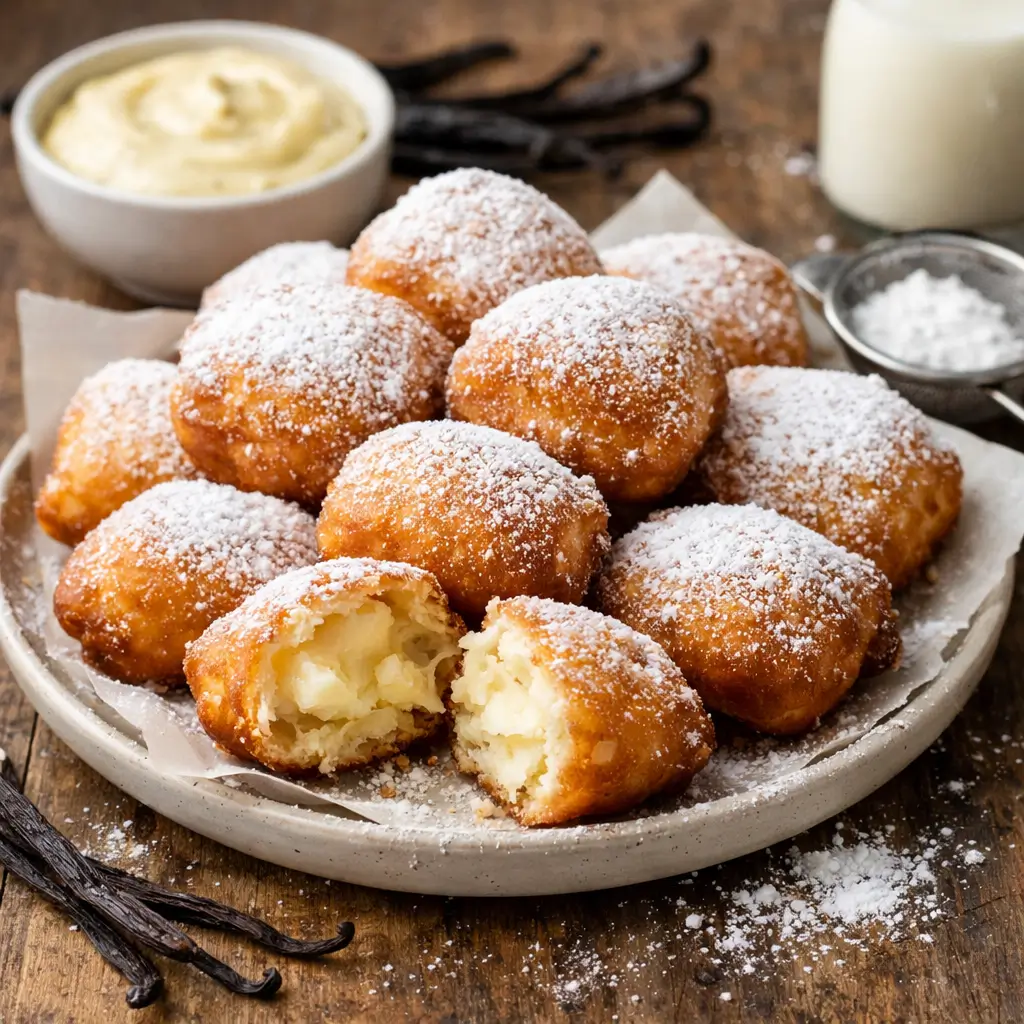
Vanilla French Beignets: How to Make Them Perfectly Fluffy
So you’re craving those pillowy, cloud-like French beignets that practically melt in your mouth, huh? I get it. There’s something absolutely magical about biting into a warm beignet dusted with powdered sugar that makes every calorie worth it. And let me tell you—making these bad boys at home is way easier than you think. No fancy culinary degree required, I promise.
I’ll walk you through everything you need to know to make vanilla French beignets that’ll have your friends asking if you secretly attended pastry school. Spoiler alert: you didn’t.
What Makes Beignets So Darn Special?
Here’s the thing about beignets—they’re not just fancy doughnuts (though people love to make that comparison). These French treats are lighter, airier, and have this incredible texture that sets them apart from their American cousins. The secret? It’s all about the dough and how you handle it.
I remember my first attempt at making beignets. Let’s just say they came out more like sad, deflated pillows than the fluffy clouds I was aiming for. But after a few trials (and errors), I cracked the code. The key is treating your dough with respect and not rushing the process.
The Ingredients You’ll Actually Need
Ever noticed how some recipes list a million ingredients that you’ll never use again? Yeah, I’m not about that life. For perfectly fluffy vanilla beignets, you need these basics:
For the Dough:
- 1 cup warm whole milk (around 110°F—not hot enough to kill the yeast, FYI)
- 2 ¼ teaspoons active dry yeast (one standard packet)
- ⅓ cup granulated sugar
- 2 large eggs, room temperature
- 1 teaspoon pure vanilla extract (the good stuff, not imitation)
- 4 cups all-purpose flour, plus extra for dusting
- 1 teaspoon salt
- 3 tablespoons unsalted butter, softened
- Vegetable oil for frying (lots of it)
For Finishing:
- 2 cups powdered sugar (trust me, you’ll use it all)
- Extra vanilla extract for dusting mixture (optional but recommended)
Pretty straightforward, right? The vanilla extract is your secret weapon here—it gives these beignets that subtle, sweet aroma that makes them utterly irresistible.
Getting Your Dough Game Right
This is where most people mess up, so pay attention. The dough is everything when it comes to fluffy beignets.
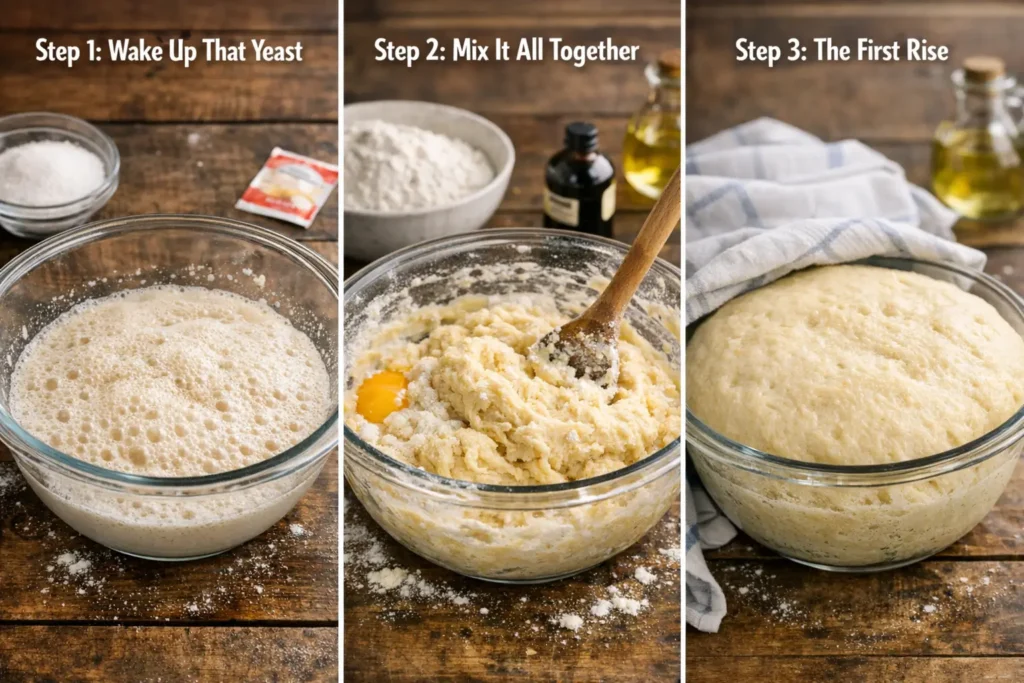
Step 1: Wake Up That Yeast
Pour your warm milk into a large mixing bowl. Sprinkle the yeast over it and add about a tablespoon of the sugar. Let this mixture sit for 5-10 minutes until it gets foamy. If it doesn’t foam? Your yeast is dead, and you need to start over. Sorry, not sorry—better to know now than after you’ve made the whole dough.
Step 2: Mix It All Together
Once your yeast is alive and kicking, add the eggs, remaining sugar, and vanilla extract. Whisk everything together until it’s well combined. This is where that vanilla magic starts happening.
In a separate bowl, mix your flour and salt. I know it seems like an extra step, but it helps distribute the salt evenly. Add the flour mixture to your wet ingredients gradually—about one cup at a time. Mix with a wooden spoon or a stand mixer with a dough hook.
Add the softened butter and continue mixing until you have a soft, slightly sticky dough. Don’t freak out if it’s tacky—that’s exactly what you want.
Step 3: The First Rise (Patience, Young Grasshopper)
Here’s where people get impatient and ruin everything. You need to let this dough rise properly. Place it in a greased bowl, cover it with a clean kitchen towel, and let it hang out in a warm spot for about 1-2 hours. It should double in size.
Why does this matter? Because this is when all those yeast cells are doing their thing, creating air pockets that’ll make your beignets fluffy. Rush this step, and you’ll get dense, sad beignets. Nobody wants that.
Rolling and Cutting: Don’t Overthink It
After your dough has doubled (honestly, it’s kind of satisfying to watch), punch it down. Literally just punch it. It’s therapeutic, IMO.
Turn the dough out onto a lightly floured surface and roll it to about ¼-inch thickness. Don’t go thinner thinking you’ll get more beignets—you’ll just end up with crispy crackers instead of fluffy clouds.
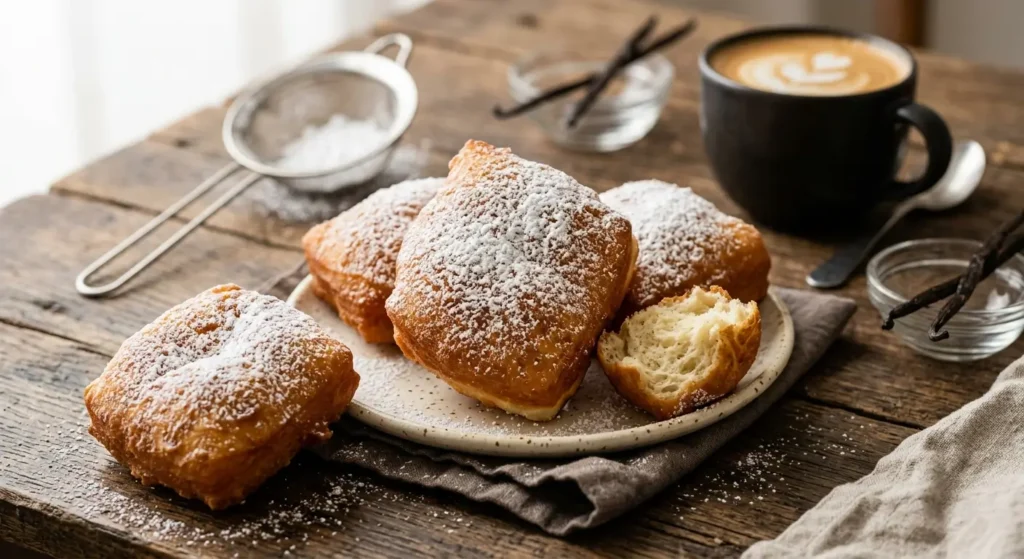
Cut the dough into squares or rectangles—traditionally, they’re about 2-3 inches. You can use a pizza cutter, a knife, or even a pastry wheel if you’re feeling fancy. I use a pizza cutter because I’m lazy and it works perfectly.
Here’s a pro tip: Let the cut pieces rest for another 15-20 minutes before frying. This second rise is crucial for maximum fluffiness. Cover them loosely with that kitchen towel again.
The Frying Process: Where the Magic Happens
Alright, this is the fun part. Heat about 3-4 inches of vegetable oil in a deep, heavy pot to 360°F. Use a thermometer—guessing the temperature is how you end up with burned outsides and raw insides. Trust me on this one.
The Perfect Fry
Drop 2-3 dough squares into the hot oil. Don’t overcrowd the pot, or the temperature will drop and your beignets will absorb too much oil. Gross.
They’ll puff up almost immediately—it’s actually pretty cool to watch. Fry them for about 2-3 minutes per side until they’re golden brown. They should look like little puffy pillows floating in oil.
Use a slotted spoon or spider strainer to remove them and place them on a paper towel-lined plate. Let them drain for just a minute—you don’t want them sitting too long or they’ll deflate.
The Powdered Sugar Situation
Here’s where you go absolutely wild with the powdered sugar. And I mean WILD. Put your still-warm beignets in a large bowl or paper bag, dump a generous amount of powdered sugar on them, and shake it up.
Want to level this up? Mix a tiny bit of vanilla extract into your powdered sugar first. It’s a small touch, but it makes a difference.
You literally cannot use too much powdered sugar on beignets. It’s basically a law in New Orleans, and I’m sticking with it.
Common Mistakes (So You Don’t Make Them)
Let me save you some heartache by sharing what NOT to do:
- Don’t use cold ingredients. Room temperature eggs and warm milk are non-negotiable. Cold ingredients won’t activate the yeast properly.
- Don’t skip the rises. I know waiting is boring, but those rise times create the texture you’re after.
- Don’t fry at the wrong temperature. Too hot = burned outside, raw inside. Too cool = greasy, dense beignets.
- Don’t roll the dough too thin. Thick squares = fluffy beignets. Thin squares = disappointment.
- Don’t forget to have fun. These are supposed to be enjoyable to make!
Storage and Reheating Tips
Real talk: beignets are best eaten fresh. Like, within an hour of frying. That’s when they’re at peak fluffiness. But if you have leftovers (doubtful), you can store them in an airtight container for a day.
To reheat, pop them in a 350°F oven for about 5 minutes. Don’t microwave them unless you want to chew on rubber. You’ll need to re-dust them with powdered sugar after reheating because most of it will have absorbed into the beignet.
Why Homemade Beats Store-Bought Every Time
Sure, you could buy frozen beignets or beignet mix. But why would you when making them from scratch is this straightforward? The taste difference is massive. Homemade beignets have that fresh-fried warmth and flavor that no freezer can replicate.
Plus, there’s something ridiculously satisfying about pulling off a batch of perfect beignets in your own kitchen. The smell alone is worth the effort.
Mix It Up: Vanilla Variations
Once you’ve mastered the basic vanilla beignet, you can get creative:
- Add a teaspoon of cinnamon to the dough for a spiced version
- Fill them with vanilla pastry cream after frying
- Drizzle with chocolate ganache instead of just powdered sugar
- Mix in some citrus zest for a bright, fresh twist
The vanilla base is versatile enough to handle pretty much any flavor combination you throw at it.
Final Thoughts: You’ve Got This
Look, making beignets at home isn’t rocket science. It’s basically just mixing dough, letting it rise, cutting squares, and frying them up. The hardest part? Waiting for those rise times when you just want to eat the dang things already.
But when you bite into that first warm, fluffy, sugar-coated beignet that YOU made? It’s worth every minute of waiting. Your kitchen will smell incredible, you’ll feel like a pastry genius, and honestly, you’ll probably never want to buy beignets again.
So grab your ingredients, channel your inner French pastry chef, and make some magic happen. These vanilla French beignets are easier than you think and more delicious than you remember. And hey, if your first batch isn’t perfect, that’s what second batches are for.
Now go forth and fry. Your fluffy beignet future awaits.
Vanilla French Beignets: How to Make Them Perfectly Fluffy
Course: Breakfast, DessertCuisine: French8
servings1
hour30
minutes20
minutes245
kcalIngredients
1 cup warm whole milk (around 110°F—not hot enough to kill the yeast, FYI)
2 ¼ teaspoons active dry yeast (one standard packet)
⅓ cup granulated sugar
2 large eggs, room temperature
1 teaspoon pure vanilla extract (the good stuff, not imitation)
4 cups all-purpose flour, plus extra for dusting
1 teaspoon salt
3 tablespoons unsalted butter, softened
Vegetable oil for frying (lots of it)
Directions
- Step 1: Activate the Yeast
Mix warm milk, yeast, and a little sugar. Let sit 5–10 minutes until foamy. - Step 2: Make the Dough
Add eggs, remaining sugar, and vanilla. Mix well.
Combine flour and salt separately, then gradually add to the mixture.
Add butter and mix until you get a soft, slightly sticky dough. - Step 3: Let It Rise
Place dough in a greased bowl, cover, and let rise in a warm place for 1–2 hours until doubled in size.